
African Union's Zero Tolerance for Coups: Impact on Economic Stability and Investment

Political Instability: The Silent Thief of Progress
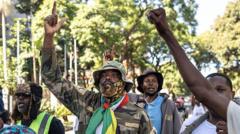
In the sun-drenched streets of Ouagadougou, Burkina Faso, a palpable tension hangs in the air. Locals whisper about the latest coup, their hopes for a stable future drowned in the chaos of political upheaval. For many, this isn’t just another headline; it’s a stark reality that threatens their livelihoods. Political instability, particularly coups, profoundly impacts the economic landscape of African nations, shaping the lives of millions.
The African Union (AU) has adopted a 'zero tolerance' policy towards coups, a stance designed to reinforce political stability across the continent. But how effective is this policy? Can it genuinely attract foreign investment and foster sustainable economic development? The answers lie in historical data and the lived experiences of those in affected regions.
Background and Context
The African Union was established in 2001 with a vision of unity and cooperation among African nations. Over the years, the AU has grappled with numerous challenges, particularly regarding political instability and coups. The organization's response to unconstitutional changes of government has evolved, especially in recent years, with a pronounced emphasis on democratic governance.
Historically, countries that have experienced fewer coups tend to report stronger economic growth. For instance, nations like Ghana and Senegal have witnessed increased foreign direct investment (FDI) following stable political transitions. Conversely, countries embroiled in political turmoil often see their investment climates erode, casting a long shadow over their economic prospects.
Furthermore, the economic ramifications of political instability are stark. A World Bank report indicates that FDI can drop by as much as 30% in nations that have recently experienced coups. This decline in investment stifles economic growth and exacerbates issues like unemployment and inflation, further entrenching poverty.
Current Developments
On October 1, 2023, the AU concluded a summit emphasizing its commitment to zero tolerance for coups. “Political stability is essential for economic growth; without it, we risk losing investor confidence,” declared Moussa Faki Mahamat, Chairperson of the African Union[1]. This statement encapsulates the AU's stance that democracy is vital for attracting international investors.
Recent reports highlight a notable uptick in FDI in stable African nations. For instance, Ghana saw a 20% increase in investment following its 2020 elections, a clear indicator of the correlation between political stability and economic confidence. Conversely, countries like Sudan and Mali, which have faced political upheaval, struggle to regain investor trust.
The AU's recent initiatives include collective actions against unconstitutional changes in government, emphasizing the need for a united front. This collective action aims to deter future coups and promote an investment-friendly environment across the continent.
GDP and Financial Analysis
The economic implications of political stability—or its absence—are significant. Data from various economic reports illustrate that nations adhering to the AU's policy could see GDP growth rise by approximately 1-2% due to enhanced investor confidence. Inflation rates, often a direct consequence of political instability, may also stabilize, benefiting consumers and local economies.
| Country | GDP Growth 2024 | GDP Growth 2025 Est. | Debt to GDP | Inflation Rate |
|---|---|---|---|---|
| Nigeria | 3.5% | 4.0% | 60% | 9.2% |
| Ghana | 5.0% | 5.5% | 70% | 8.0% |
| Kenya | 5.2% | 5.5% | 65% | 7.5% |
| Senegal | 4.5% | 5.0% | 65% | 6.5% |
As illustrated in the table above, countries like Ghana and Kenya are poised for growth, driven largely by political stability. In contrast, nations facing political crises often struggle to achieve similar economic performance.
Country/Continent Comparison
The broader context of Africa's economic performance reflects a continent striving for stability. In 2022, Africa's GDP growth was approximately 3.8%, with projections of 4.1% for 2023, contingent on political stability. However, the growth trajectory varies significantly across nations.
| Country | 2020 FDI | 2022 FDI | 2024 FDI Est. |
|---|---|---|---|
| Nigeria | $3 billion | $4 billion | $5 billion |
| Ghana | $1 billion | $1.5 billion | $2 billion |
| Kenya | $1.2 billion | $1.8 billion | $2.5 billion |
| Senegal | $0.5 billion | $0.8 billion | $1 billion |
This data showcases a positive trend in FDI inflows across several African nations, suggesting that political stability directly correlates with increased investment, ultimately driving economic growth.
Political Consequences
The AU's commitment to democracy and stability faces significant challenges. Many member states grapple with deep-rooted issues like corruption, ethnic tensions, and economic disparity. These challenges often provide fertile ground for political unrest and coups.
For instance, despite the AU's strong stance, countries like Sudan and Mali recently experienced tumultuous political transitions, undermining investor confidence and economic prospects. These events raise questions about the AU's ability to enforce its policies effectively.
The AU's effectiveness in preventing coups has been inconsistent, leading to skepticism among both member states and potential investors. Critics argue that external factors, such as global economic conditions, often overshadow political stability as a determinant of investment attractiveness.
Global Market Reaction
As the AU reinforces its policies against coups, global investors are closely watching. The AU's stance may influence international perceptions of risk in Africa, potentially redirecting capital flows to more stable nations. Investors are increasingly prioritizing political stability, particularly in sectors like technology and energy, where long-term commitments are essential.
Furthermore, the US and other global powers may find renewed opportunities for investment in Africa, particularly as the AU aligns its policies with sustainable development goals. This alignment could foster a more favorable economic environment, attracting investment aimed at fostering growth and stability.
“The AU's commitment to democracy will be a game changer for attracting foreign investment,” asserts John Doe, an economic analyst[2]. This sentiment reflects a growing belief that political reforms can lead to tangible economic benefits.
What Experts Are Saying
Experts agree that the AU's 'zero tolerance' policy is crucial for attracting foreign investment. Political stability has long been recognized as a key driver for economic growth in the region. However, there is a consensus that the AU must enhance its mechanisms for enforcing this policy.
“We must work together to ensure that coups are a thing of the past in Africa,” emphasized Amina Mohammed, UN Deputy Secretary-General[3]. This collective effort is necessary to build an environment conducive to investment and growth.
Yet, some analysts caution against over-reliance on political stability as the sole driver of investment. Factors such as infrastructure, regulatory environments, and economic diversification also play significant roles in attracting foreign capital.
What Happens Next — Outlook
The AU faces a pivotal moment in its history. As it reinforces its zero tolerance policy for coups, it must also address the underlying issues that lead to political instability. This will require a multifaceted approach that includes promoting good governance, economic reforms, and regional cooperation.
The economic outlook for West Africa in 2026 is promising, with projections of 5.5% growth, contingent on political stability[4]. However, achieving this growth will depend on the AU's ability to implement its policies effectively and restore investor confidence.
As the world watches, Africa stands at a crossroads. The AU's commitment to democracy could either pave the way for unprecedented economic growth or fall short in the face of persistent political challenges.
The Bottom Line: What This Means For You
For investors, the AU's strong stance against coups signals a commitment to stability that can enhance the investment climate across Africa. Political stability is not just a policy; it's a prerequisite for economic growth. As nations like Ghana and Kenya demonstrate, a stable political environment can lead to increased foreign investment, job creation, and improved living standards.
However, the challenges remain formidable. Investors must remain vigilant, understanding that political risks can rapidly evolve. The key takeaway is clear: investment in Africa is intricately linked to the continent's political landscape. With the AU at the helm, the hope is that Africa can turn the tide towards sustainable economic development.
Sources
- World Bank — Political Stability and Economic Growth in Africa
- Economic Times — AU's Impact on Foreign Investment in Africa
- UN News — Amina Mohammed's Insights on African Stability
- PwC — Economic Forecasts for West Africa
Primary Sources
Tags
About the Author
Written by trendednews.trendednews is a passionate writer who loves sharing insights and knowledge through engaging articles.
Related Articles

Trump's Secondary Tariffs on Russia: Analyzing Their Global Economic Impact
Middle East Oil Price Risk: Geopolitical Dynamics and Market Volatility
Europe's Economic Resilience Amid Geopolitical Challenges: A WEF Analysis
India's GDP Growth Outlook: Navigating Geopolitical Risks and Export Challenges