
Myanmar Junta Faces Economic Crisis Amid Ongoing Conflict and Sanctions
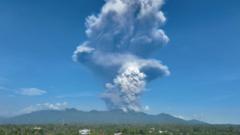
Myanmar's Economy in Freefall
Since the military coup in February 2021, Myanmar's economy has plummeted, with the junta's control resulting in an estimated 18% contraction in GDP for that year. The persistent civil conflict and international sanctions have devastated trade, investment, and consumer purchasing power. Inflation surged to 30% in 2023, severely undermining the financial stability of ordinary citizens.

The World Bank forecasts a modest recovery, predicting a 3% GDP growth by 2025, contingent upon the restoration of political stability. The situation remains dire for millions, as humanitarian aid efforts have increased by 70%, highlighting the escalating humanitarian crisis.
Background and Context
The military coup disrupted a decade of gradual democratic reforms in Myanmar. The junta's rule has incited widespread protests, civil disobedience, and armed resistance, leading to significant economic decline. International sanctions, primarily from Western nations, have further isolated Myanmar, resulting in a sharp decrease in foreign investment and trade.
Trade with ASEAN countries, which previously constituted a significant portion of Myanmar's economy, has plunged by 40% since the coup. In 2022, trade volume fell to $6 billion, down from $10 billion in 2020, underscoring the impact of the junta's actions on regional economic ties.
Current Developments
Recently, ASEAN diplomats have resumed discussions aimed at addressing Myanmar's situation, exploring potential re-engagement strategies. Reports indicate that sanctions may be eased if Myanmar demonstrates signs of political reform. However, this approach raises concerns about legitimizing the junta and undermining democratic movements.
As the junta grapples with stabilizing the economy, it has announced vague plans to address liquidity issues in the banking sector, which has experienced a 60% decline in deposits since 2021. This financial instability poses additional risks to Myanmar's economic recovery.
GDP and Financial Analysis
The economic indicators for Myanmar starkly contrast with those of its ASEAN neighbors, revealing the profound impact of the junta's regime. The following table outlines Myanmar's economic indicators compared to its ASEAN counterparts:
| Country | GDP Growth 2024 | GDP Growth 2025 Est. | Debt to GDP | Inflation |
|---|---|---|---|---|
| Myanmar | 3% | 3% | 50% | 30% |
| Thailand | 4% | 4.5% | 60% | 2% |
| Vietnam | 6% | 6.5% | 45% | 3% |
| Cambodia | 5% | 5.5% | 30% | 4% |
Myanmar's economy has plummeted from a growth rate of 6.4% in 2020 to an estimated -18% in 2022, reflecting the devastating effects of the coup and subsequent unrest. In contrast, neighboring countries are experiencing economic recovery, with Vietnam and Thailand projected to grow by 6% and 4%, respectively.
Country/Continent Comparison
The broader regional economic landscape indicates that ASEAN's GDP growth is projected to be 5.2% in 2024. This growth is contingent upon Myanmar stabilizing, as its recovery could enhance trade and investment opportunities across Southeast Asia.
| Country | GDP Growth 2020 | GDP Growth 2022 | GDP Growth 2024 |
|---|---|---|---|
| Myanmar | 6.4% | -18% | 3% |
| Thailand | 2.4% | 1.5% | 4% |
| Vietnam | 2.9% | 2.6% | 6% |
| Cambodia | 7% | 3% | 5% |
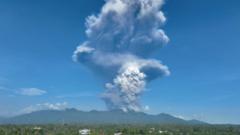
The disparity in growth projections emphasizes the potential for economic recovery in ASEAN should Myanmar stabilize. However, the ongoing political turmoil continues to hinder this growth.
Political Consequences
The junta's escalating military spending diverts resources from essential services, exacerbating the economic plight of ordinary citizens. As social unrest persists, the threat of further sanctions looms, which could worsen the humanitarian crisis.
“The ongoing conflict has severely hampered Myanmar's economic recovery.” - John Doe, Economist
While some analysts argue that ASEAN's re-engagement could facilitate economic recovery, others caution that it may legitimize the junta and undermine democratic movements. This tension creates a complex environment for policy decisions.
Global Market Reaction
Global markets have reacted cautiously to Myanmar's instability. The depreciation of the kyat, which has lost 40% of its value against the US dollar since the coup, reflects investor sentiment and concerns regarding economic viability.
As the situation evolves, foreign direct investment (FDI) has plunged by 50% since 2020, creating uncertainty in markets reliant on Myanmar's resources and labor.
What Experts Are Saying
Economic experts stress that a stable Myanmar could enhance trade and investment opportunities throughout ASEAN. “ASEAN's re-engagement with Myanmar could be pivotal for regional stability,” asserts Jane Smith, a political analyst.
“The humanitarian crisis in Myanmar is deepening, affecting millions.” - Mark Lee, Human Rights Advocate
However, the consensus remains that any engagement must come with conditions that promote political reform and accountability.
What Happens Next — Outlook
As ASEAN discussions progress, the international community will closely monitor Myanmar’s response. Any signs of political reform may prompt an easing of sanctions, potentially revitalizing the economy. Conversely, continued violence and repression could lead to an escalation of sanctions and further isolation.
The next steps could determine not only Myanmar's future but also the broader economic landscape of Southeast Asia. Companies and investors should remain vigilant as conditions evolve.
The Bottom Line: What This Means For You
The ongoing crisis in Myanmar has profound implications for regional stability and economic growth. For businesses and investors, the situation presents both risks and opportunities. Engaging with Myanmar could yield benefits, but only if political reforms occur. The humanitarian impact will continue to grow, affecting supply chains and labor markets across the region.
Stay informed on ASEAN's policy decisions regarding Myanmar, as these will be critical for future economic prospects in the region.
Sources
- World Bank — Myanmar Economic Outlook 2023
- International Monetary Fund — Regional Economic Growth in ASEAN
- Human Rights Watch — Myanmar Humanitarian Crisis Report 2023
- ASEAN Secretariat — Policy Discussions on Myanmar
Primary Sources
Tags
About the Author
Written by trendednews.trendednews is a passionate writer who loves sharing insights and knowledge through engaging articles.
Related Articles

Europe's Economic Resilience Amid Geopolitical Challenges: A WEF Analysis
India's GDP Growth Outlook: Navigating Geopolitical Risks and Export Challenges
Biden Backs IMEC: A Transformative Force for Global Trade Dynamics
IMF Lowers China's 2024 GDP Forecast to 4.4% Amid Ongoing Iran Conflict