
Pacific Islands Forum: Addressing Climate Change, Security, and China's Growing Influence

Climate Change Threatens Pacific Island Nations
Pacific Island nations are facing an existential threat from climate change, with rising sea levels projected to reach 1-2 meters by 2100, jeopardizing their very existence.[1] An estimated 50,000 people may be displaced from their homes by 2030 due to these impacts, fundamentally altering societies and livelihoods.
Tourism and fishing dominate their economies, with tourism contributing approximately 30% to GDP and fishing about 20%. Both sectors are highly vulnerable to climate-related disruptions, making urgent action imperative.
Background and Context
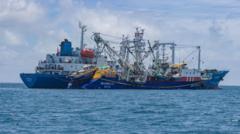
The Pacific Islands Forum (PIF) has consistently prioritized discussions on climate change, acknowledging its severe implications for regional security and economic stability. The reliance on tourism and fishing creates a precarious balance, threatening national economic health as climate change exacerbates extreme weather events and rising sea levels.
China's growing influence through infrastructure investments complicates this landscape. Over the past five years, Chinese investments in the region have surged by more than 50%, reshaping economic partnerships and heightening geopolitical tensions with Western powers, including the U.S. and Australia.
Current Developments
Recent discussions at the PIF have spotlighted climate change as a top priority, with member nations seeking enhanced climate resilience strategies amid increasing threats. The U.S. has withdrawn from the Pacific Islands environment program, which could create a funding gap of approximately $100 million annually for climate adaptation projects.[2]
This U.S. exit raises concerns that it may allow China to deepen its influence in the region, further complicating efforts to secure economic stability and environmental health.
GDP and Financial Analysis
| Country | GDP Growth 2024 | GDP Growth 2025 Est. | Debt to GDP | Inflation Rate |
|---|---|---|---|---|
| New Zealand | 3.5% | 3.0% | 30% | 2.5% |
| Fiji | 2.0% | 2.5% | 50% | 3.0% |
| Samoa | 1.5% | 2.0% | 60% | 4.0% |
Climate change is expected to impose a 2-3% annual decline on GDP across many Pacific nations. Increased extreme weather events will further affect tourism and fishing, leading to job losses and economic instability.
Country/Continent Comparison
| Continent | GDP Growth | Trend | Driver |
|---|---|---|---|
| Oceania | 2.5% | Declining | Climate change impacts and geopolitical tensions |
| Asia | 5.0% | Stable | Robust economic recovery post-pandemic |
The economic outlook for the Pacific remains grim, with climate change threatening critical industries. While infrastructure investments from China may provide short-term relief, they risk creating long-term dependency.
Political Consequences
The U.S. exit from the Pacific Islands environment program represents a significant setback for climate resilience efforts, according to analysts. This withdrawal diminishes U.S. influence in a region where China is aggressively expanding its footprint through infrastructure investments and diplomatic ties.[3]
New Zealand's role as a Pacific gateway is increasingly critical in countering China’s influence. The recent Free Trade Agreement with India underscores efforts to strengthen economic ties with Pacific nations.
Global Market Reaction
Global markets are reacting to the shifting dynamics in the Pacific Islands, with increased volatility expected in commodity prices related to fishing and tourism. Uncertainty surrounding U.S. engagement may lead to a cautious approach from investors.
As Pacific nations grapple with climate change, the potential for rising unemployment in tourism and fishing sectors looms large, further destabilizing regional economies.
What Experts Are Saying
“Climate change is existential for Pacific Island nations; we must act now to secure our future.” — WMO Representative, 2023
Experts emphasize the urgency of addressing climate impacts on the Pacific Islands. The PIF's focus on climate resilience is essential for safeguarding livelihoods and regional stability.
While China's investments may offer short-term benefits, they could lead to long-term challenges regarding governance and environmental policy, potentially undermining local autonomy.
What Happens Next — Outlook
The outlook for Pacific Island nations is precarious. With climate change accelerating, immediate action is critical. Both regional cooperation and international support will be necessary to develop sustainable solutions.
Watch for shifts in U.S. policy towards the Pacific, particularly regarding climate initiatives, as well as further developments in China’s infrastructure investments. The balance of power in the region is at stake.
The Bottom Line: What This Means For You
The challenges facing Pacific Islands have far-reaching implications for global economics and security. As climate change intensifies, the economic stability of vulnerable nations hangs in the balance.
For investors, understanding the geopolitical landscape is crucial. Increased Chinese influence could reshape trade dynamics, while U.S. strategies may need reevaluation to maintain relevance in the region.
Individuals in the tourism and fishing sectors should prepare for potential disruptions as climate impacts escalate.
Sources
- World Meteorological Organization — Climate Change Impacts Report
- Harvard Kennedy School — U.S. Withdrawal from Pacific Islands Program
- Whalesbook — Economic Investment Trends in the Pacific
Primary Sources
Tags
About the Author
Written by trendednews.trendednews is a passionate writer who loves sharing insights and knowledge through engaging articles.
Related Articles
Ecuador's Debt-for-Nature Swap: A Sustainable Economic Model for Latin America
Nigeria's Poverty Crisis Deepens Amid Political Instability: Outlook for 2026
Nigeria Interest Rate Hike to 24.75%: Economic Impact Explained

SEA Games 2025 Economic Impact: Boosting Thailand and Southeast Asia