
Strait of Hormuz Oil Supply Risks: Impacts on Asian Economies

Rising Tensions in the Strait of Hormuz
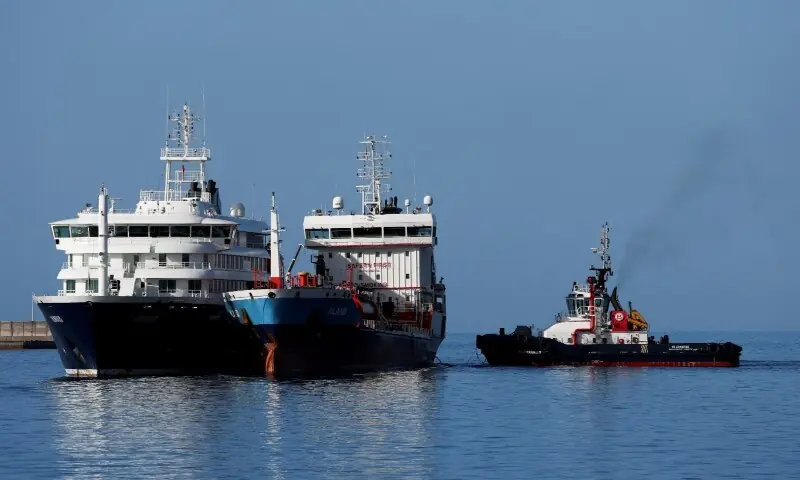
The Strait of Hormuz is vital for global energy security, with approximately 20% of the world's oil passing through this narrow passage. As of May 2026, recent attacks in the region have escalated concerns regarding the reliability of oil and gas supplies. This situation poses significant risks for Asian economies, particularly Japan and South Korea, which heavily depend on shipments from this strategic chokepoint.

Background and Context
Historically, the Strait of Hormuz has been a flashpoint for geopolitical tensions, especially between Iran and Western nations. In 2025, the U.S. escalated its military presence in response to threats from Iran, leading to fears of conflict that could disrupt oil supplies. South Korea relied on the Strait for approximately 80% of its liquefied natural gas (LNG) imports, while Japan's dependency on oil from this region reached around 90% in 2025. The potential for supply disruptions has profound implications for both countries' economies.
Current Developments
As tensions rise, crude oil prices have surged to approximately $95 per barrel as of May 2026, a significant increase from $75 in 2024. South Korea's GDP growth, previously at 2.3% in 2025, is now projected to decline to 1.8% in 2026, largely due to energy supply risks. Japan faces a similar fate, with GDP growth forecasted to drop from 1.7% in 2025 to 1.2% in 2026.

GDP and Financial Analysis
| Country | GDP Growth 2025 | GDP Growth Forecast 2026 | GDP (USD Trillion) | Debt to GDP (%) | Inflation Rate (%) |
|---|---|---|---|---|---|
| South Korea | 2.3% | 1.8% | 1.6 | 45% | 3.5% |
| Japan | 1.7% | 1.2% | 4.9 | 240% | 2.8% |
The table illustrates that both countries are experiencing a significant slowdown in economic growth, which analysts attribute to rising energy costs and uncertainties surrounding the Strait of Hormuz. In South Korea, inflation rates are projected to rise from 3.5% in 2025 to 4.2% in 2026. Japan's inflation is forecasted to increase from 2.8% to 3.5% during the same period.
Country/Continent Comparison
| Country | Energy Security Level 2022 | Energy Security Level 2024 | Energy Security Level 2026 |
|---|---|---|---|
| South Korea | 60% | 70% | 75% |
| Japan | 65% | 75% | 80% |
This table highlights the progress made by South Korea and Japan in strengthening their energy security. Despite these improvements, both countries remain vulnerable to disruptions originating from the Strait of Hormuz.

Political Consequences
The geopolitical landscape in the Middle East is rapidly evolving, particularly with the U.S. war against Iran casting a long shadow over international relations. Recently, President Trump has faced criticism for his handling of the situation, which some analysts believe is weakening U.S. diplomatic leverage in the region. Senator Jack Reed emphasized that Trump's upcoming meeting with Chinese President Xi Jinping is overshadowed by geopolitical tensions, notably the Iran conflict. The persistent instability in the region raises questions about the reliability of energy supplies to Japan and South Korea, complicating their energy security strategies.
Global Market Reaction
Global markets have reacted sharply to the rising oil prices and geopolitical tensions. As of May 2026, stock markets in South Korea and Japan are experiencing volatility, with the KOSPI down 1.5% and the Nikkei 225 down 2.0%. The depreciation of the South Korean won to 1,300 against the U.S. dollar and the Japanese yen to 135 further complicates economic stability in these nations. Increased import costs are expected to worsen trade balances and reduce export competitiveness.
What Experts Are Saying
The U.S. war against Iran threatens to be a dark cloud following President Trump's meeting with Chinese President Xi Jinping.
This sentiment reflects the prevailing concerns among experts who fear that prolonged conflict could lead to significant disruptions in oil and gas supplies through the Strait of Hormuz. Many analysts argue that South Korea and Japan's heavy reliance on energy imports from this critical route makes them particularly susceptible to price shocks and supply interruptions.
What Happens Next — Outlook
Looking ahead, analysts expect the geopolitical situation to remain tense. The potential for alternative supply routes is limited, as existing infrastructure cannot fully compensate for disruptions in the Strait of Hormuz. Strategic petroleum reserves in South Korea and Japan, which can cover approximately 90 days of consumption, may provide temporary relief but are not sustainable long-term solutions. By 2027, experts predict that both countries will need to diversify their energy sources further to mitigate risks associated with the Strait of Hormuz.
The Bottom Line: What This Means For You
The ongoing conflict in the Strait of Hormuz carries profound implications for everyday consumers in South Korea and Japan. Rising energy prices will likely lead to increased costs of living, affecting household budgets and consumer spending. As both nations grapple with rising inflation and economic slowdowns, the urgency to develop alternative energy sources and strategies for energy security has never been greater.
Sources
- Reuters — Oil Prices Surge Amid Tensions in the Middle East
- The Hill — U.S. War Against Iran and Its Economic Impacts
- Bloomberg — Japan and South Korea's Energy Security Strategies
- World Bank — Economic Outlook for East Asia and the Pacific
Primary Sources
Primary sources used
- The Hill — Iran war may give China, Xi, some leverage on Trump at Beijing summit
- The Hill — Trump 'terribly weakened' ahead of China visit: Top Armed Services Democrat
- AP News — A humanoid robot becomes Buddhist monk in South Korea ahead of Buddha’s birthday
- CBS News — Taiwan to be key issue at Trump's high-stakes summit with Chinese president Xi Jinping
- The Guardian — Tehran, Taiwan, trade … what are the hazards facing Trump on Xi summit tightrope?
Tags
About the Author
Written by trendednews.trendednews is a passionate writer who loves sharing insights and knowledge through engaging articles.
Related Articles

Health Risks and Economic Fallout from Unapproved Peptides in Australia
Geopolitics of Energy in the Middle East: Dynamics of Oil Price Risk
China's Diplomatic Tour in East Africa: Impacts on Trade and Debt Sustainability
Bangladesh-Pakistan Rapprochement: Economic Gains and Geopolitical Impact