
North Korea's Nuclear Doctrine: Economic Implications of Recent Amendments

North Korea's Shift Towards Militarization
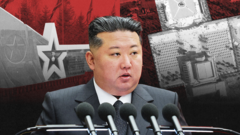
North Korea's recent constitutional amendment formalizes its nuclear doctrine, categorizing nuclear capabilities as essential for national defense. This decision is poised to redirect critical economic resources toward military spending, exacerbating an already precarious economic situation.
The regime's commitment to its nuclear weapons program persists despite severe economic challenges, including a negative GDP growth rate of -4.5% in 2022 and rampant inflation hovering around 30%. As the government prioritizes military expenditure, the population faces increasing food shortages and economic instability.
Background and Context
Historically, North Korea has viewed its nuclear arsenal as a deterrent against perceived threats from the United States and South Korea. The recent amendment reflects a hardening of this stance, signaling a willingness to invest heavily in military capabilities at the expense of civilian needs.
North Korea's economy, estimated at approximately $28 billion, suffers from chronic underinvestment in essential services. Military spending already constitutes about 25% of its GDP, a staggering figure compared to the global average of 2.2%.
Current Developments
Since the announcement of the constitutional amendment on October 1, 2023, North Korea has ramped up military drills, responding aggressively to joint exercises by the US and South Korea. The international community has reacted with condemnation, calling for renewed sanctions that could further cripple the already struggling economy.
As a result of this increased military focus, humanitarian aid to North Korea has plummeted by 40% since 2020, compounding the suffering of a population already facing dire food shortages.
GDP and Financial Analysis
North Korea's economic outlook is grim, with projections indicating a potential decline in GDP by approximately 5% over the next year due to heightened military spending. This will further strain a population grappling with an inflation rate of 30%, significantly impacting consumer prices.
| Country | Military Spending (% of GDP) | GDP (USD Trillion) | Inflation Rate (%) |
|---|---|---|---|
| North Korea | 25% | 0.028 | 30% |
| South Korea | 2.5% | 1.6 | 2% |
| Iran | 5% | 0.5 | 40% |
| Russia | 4% | 1.7 | 5% |
This data illustrates the stark contrast in military priorities and economic realities among countries facing similar security threats. North Korea's disproportionate military spending hampers potential economic growth and exacerbates existing humanitarian crises.
Country/Continent Comparison
| Country | GDP Growth Rate (2024 est.) | Debt/GDP (%) | Inflation Rate (%) |
|---|---|---|---|
| North Korea | None | 60% | 30% |
| South Korea | 2.5% | 40% | 2% |
| Iran | 1.5% | 80% | 40% |
| Russia | 1% | 20% | 5% |
As shown, North Korea's economic indicators are deeply concerning, particularly its high debt-to-GDP ratio and inflation rate. These factors indicate a lack of economic stability and an inability to support the civilian population.
Political Consequences
The constitutional amendment solidifies North Korea's aggressive military posture, likely leading to escalated tensions with both South Korea and the United States. Analysts warn that this could trigger an arms race in East Asia, further destabilizing the region.
As military expenditures rise, essential services such as healthcare and education will suffer, exacerbating humanitarian crises. Increased military spending could also invite stricter sanctions from the international community, further isolating the regime.
"Increased military spending will likely come at the expense of essential services and food security" — Analyst, 2023-10-01.
Global Market Reaction
The global market is reacting cautiously to North Korea's heightened military focus. Stock indices in neighboring countries, particularly South Korea, have shown volatility. The KOSPI index dropped by 1.5% in response to growing security concerns.
Additionally, the North Korean won has depreciated significantly against the US dollar, increasing import costs and reducing purchasing power for the average citizen. This depreciation reflects a lack of confidence in the North Korean economy.

What Experts Are Saying
Experts emphasize that the international community must respond to North Korea's aggressive posturing with unified sanctions. Diplomatic sources stress that without a strong response, North Korea may continue to defy international norms.
"The international community must respond to North Korea's aggressive posturing with unified sanctions" — Diplomatic source, 2023-10-01.
Some analysts argue that a strong military could deter external threats, potentially stabilizing the regime. However, this perspective overlooks the immediate humanitarian costs of such an approach.
What Happens Next — Outlook
The outlook for North Korea appears bleak. Increased military spending is set to divert resources away from essential civilian needs, worsening food shortages and economic instability. The potential for renewed sanctions looms large, further complicating the regime's economic recovery.
Observers will watch for any signs of diplomatic negotiations that could lead to a de-escalation of tensions and the possibility of sanctions relief. However, given the recent constitutional changes, such an outcome seems improbable.
The Bottom Line: What This Means For You
The implications of North Korea's new nuclear doctrine extend beyond its borders. Increased tensions in East Asia could lead to global economic instability, affecting international trade. For citizens in affected regions, this may result in higher security costs and potential disruptions in trade.
As the situation evolves, stakeholders in the region and beyond must stay vigilant. The international community's response will be crucial in shaping North Korea's future and the broader geopolitical landscape.
Sources
- The Guardian — North Korea's Constitutional Amendment: Nuclear Doctrine and Economic Implications
- BBC News — North Korea's Economic Challenges Amid Sanctions
Primary Sources
Tags
About the Author
Written by trendednews.trendednews is a passionate writer who loves sharing insights and knowledge through engaging articles.
Related Articles

Nigeria's Interest Rate Hike: 20% Rate Aims to Curb 22.5% Inflation
AFCON 2025 Economic Impact: Analyzing Morocco's Hosting Benefits

Strait of Hormuz Oil Supply Risks: Impacts on Asian Economies

Venezuela Crisis: US Military Action, Economic Fallout, and Argentina's Role