
Pacific Islands Fuel Crisis Triggers Biketawa Declaration: Economic Fallout
Fuel Prices Surge, Regional Economies at Risk
The Pacific Islands Forum invoked the Biketawa Declaration on October 15, 2023, in response to a crippling fuel crisis. Average fuel prices have surged by 30% since January 2023, jeopardizing economic stability across the region. This crisis is projected to reduce GDP growth across the Pacific Islands from 4% in 2023 to 2.5% in 2024, while inflation rates are expected to climb by 5%.
This unprecedented scenario threatens not only the economic backbone of the islands—tourism and fishing—but also essential services, exacerbating existing inequalities among nations. For many, the consequences are dire, as rising costs threaten livelihoods and push local economies into turmoil.
Background and Context
The Pacific Islands Forum (PIF) serves as a crucial cooperative body aimed at fostering unity among Pacific nations. The Biketawa Declaration, established in 2000, provides a framework for collective action in the face of regional crises. This invocation comes amid global supply chain disruptions and geopolitical tensions that have led to significant fuel price hikes.
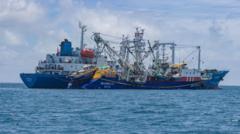
The Pacific Islands' heavy reliance on tourism—accounting for over 30% of GDP in nations like Fiji and Samoa—renders them particularly vulnerable to fluctuations in fuel prices. The fishing industry, another economic pillar, is facing operational cost increases of around 20%. A downturn in these sectors could result in widespread economic hardship for local populations.
Current Developments
As of mid-October 2023, reports from tourism operators in Fiji indicate a significant drop in bookings, with expectations of a 15% decline in tourism revenue. The fishing industry has echoed these sentiments, expressing deep concerns about rising operational costs as fuel prices continue to climb.
Local governments are scrambling to address fuel shortages, implementing measures to mitigate the impact on essential services like healthcare and transportation. Amidst these challenges, leaders stress the necessity of regional cooperation to bolster economic resilience.
GDP and Financial Analysis
The economic ramifications of the fuel crisis are staggering. GDP growth for the Pacific Islands is predicted to slow considerably, impacting both current and future economic forecasts. The following table outlines GDP growth, debt-to-GDP ratios, and inflation rates for key Pacific Island nations:
| Country | GDP Growth 2024 | GDP Growth 2025 Estimate | Debt to GDP | Inflation Rate |
|---|---|---|---|---|
| Fiji | 2.5% | 3% | 60% | 6% |
| Samoa | 2% | 2.5% | 50% | 6% |
| Tonga | 2.2% | 2.7% | 70% | 5% |
| Vanuatu | 2.8% | 3.2% | 65% | 5% |
This data highlights that Fiji's GDP growth will decline sharply, while inflation remains high across all countries. The pressure on local currencies also mounts, with some experiencing depreciation against the US dollar.
Country/Continent Comparison
The broader economic picture for Oceania reflects a concerning trend. The following table provides a snapshot of GDP growth rates from 2020 to 2024:
| Country | 2020 GDP Growth | 2022 GDP Growth | 2024 GDP Growth |
|---|---|---|---|
| Fiji | 1.5% | 4% | 2.5% |
| Samoa | 2% | 3.5% | 2% |
| Tonga | 1.8% | 3% | 2.2% |
| Vanuatu | 2.5% | 4.5% | 2.8% |
This analysis shows a clear downward trend in economic growth, exacerbated by the current fuel crisis. Such instability poses a long-term threat to the region's recovery and development.
Political Consequences
The invocation of the Biketawa Declaration marks a significant moment in regional governance. Leaders like Prime Minister Frank Bainimarama of Fiji have highlighted the fuel crisis as a wake-up call to regional vulnerabilities.
The fuel crisis has highlighted our vulnerabilities and the need for regional cooperation — Prime Minister of Fiji, October 15, 2023.
With inflation and unemployment likely to rise, anticipated political instability could disrupt governance across the region. The PIF's response will be closely scrutinized, as public perception of economic management influences political stability.
Global Market Reaction
The fuel crisis in the Pacific Islands has implications beyond regional borders. Global energy prices may experience upward pressure as the situation unfolds, affecting oil supply chains worldwide. Increased humanitarian aid from international organizations could stabilize the region, potentially influencing U.S. foreign policy toward the Pacific.
Stock markets may react negatively as economic uncertainty looms, with volatility expected in regional exchanges. The situation underscores the interconnectedness of local economies with global markets.
What Experts Are Saying
Analysts emphasize the importance of regional cooperation in mitigating the crisis's impacts. Secretary-General of the Pacific Islands Forum, Henry Puna, stated,
We must act collectively to mitigate the impacts of this crisis on our economies — Secretary-General of the Pacific Islands Forum, October 15, 2023.
Experts also caution that rising operational costs will disproportionately affect low-income households, exacerbating existing inequalities. While some posit that the crisis could prompt innovation and diversification within Pacific economies, the immediate challenges remain pressing.
What Happens Next — Outlook
The outlook remains uncertain. Immediate measures to stabilize fuel access and prices are critical. However, the long-term economic strategies of individual countries will determine resilience against similar crises in the future.
Governments may need to explore alternative energy sources and bolster local industries to reduce dependence on imported fuels. Increased regional cooperation will be vital in addressing these challenges.
Bottom Line: What This Means For You
The fuel crisis is not just an economic statistic; it impacts everyday lives across the Pacific Islands. Higher prices for goods and services will strain household budgets, particularly for those already struggling. As tourism and fishing sectors falter, entire communities may face economic hardship.
Stay informed about regional developments, as government responses will shape the future economic landscape. The invocation of the Biketawa Declaration signals a collective approach to problem-solving, offering hope for a more resilient future.
Sources
- Pacific Islands Forum — Biketawa Declaration Overview
- World Bank — Economic Outlook for Pacific Islands
- International Monetary Fund — Inflation Trends in Pacific Economies
- Local News Reports — Economic Impact of Fuel Prices
Primary Sources
Tags
About the Author
Written by trendednews.trendednews is a passionate writer who loves sharing insights and knowledge through engaging articles.
Related Articles

Nigeria's Interest Rate Hike: 20% Rate Aims to Curb 22.5% Inflation
AFCON 2025 Economic Impact: Analyzing Morocco's Hosting Benefits

Strait of Hormuz Oil Supply Risks: Impacts on Asian Economies

Venezuela Crisis: US Military Action, Economic Fallout, and Argentina's Role