
The Impact of the Iran War on India: Modi's Austerity Measures Explained

The Human Cost of the Iran War: A Call for Austerity
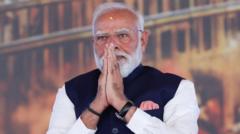
As the Iran war escalates, Prime Minister Narendra Modi has initiated austerity measures aimed at conserving resources. His recent directive encourages Indians to work from home and limit foreign travel to mitigate the economic fallout from rising oil prices. The conflict has significantly disrupted global oil supplies, resulting in a 20% surge in oil prices as of May 2026, which directly impacts India's economy.
These austerity measures are crucial, given that India imports approximately 85% of its oil, making it highly vulnerable to fluctuations in global prices. Modi asserts that reducing fuel consumption by 10% could save the country up to $10 billion in foreign exchange reserves this year. With India's foreign exchange reserves currently around $580 billion, these savings are vital for economic stability.
Background and Context of the Iran Conflict
The ongoing conflict in Iran has created significant geopolitical tensions, particularly affecting oil supply routes through the Strait of Hormuz. Historically, India has relied heavily on oil imports from the Middle East, spending around $120 billion on oil in 2025. As the situation in Iran deteriorates, these costs are projected to rise to $150 billion in 2026, exposing India to the risks associated with global oil price spikes.
In 2025, inflation in India was relatively stable at 4.5%, but it has surged to 7.2% as of May 2026, primarily driven by rising fuel costs. The trade deficit has also widened to $20 billion, exacerbated by increased oil import expenses. The economic impact of the Iran war is evident, necessitating immediate and effective government intervention.
Current Developments in India's Economic Strategy
Modi's call for austerity is part of a broader strategy to stabilize India’s economy amid rising inflation and a deteriorating trade balance. By encouraging remote work and limiting non-essential travel, the government aims to reduce overall fuel consumption, which directly impacts foreign exchange outflows. The urgency of these measures reflects the escalating crisis and the need for immediate action.
Economic analysts express concern that while austerity measures are necessary, they may not be sufficient to address underlying structural issues in India's economy.
"The situation in Iran has made it imperative for us to rethink our energy strategies,"noted a leading economic analyst. This sentiment underscores the need for a comprehensive energy policy that reduces dependency on imported oil.
GDP and Financial Analysis — Economic Comparison Table
| Country | GDP Growth Rate 2026 | Inflation Rate | Debt to GDP |
|---|---|---|---|
| India | 5.5% | 7.2% | 90% |
| China | 5.2% | 2.5% | 60% |
| Saudi Arabia | 3.0% | 3.0% | 30% |
The economic indicators reveal that India is facing significant challenges compared to other oil-importing nations. With a GDP growth projection of only 5.5% in 2026, down from 6.5% in 2025, the economic strain is evident. A high debt-to-GDP ratio of 90% further complicates India's financial landscape.
Country and Continent Comparison — Economic Indicators
| Continent | GDP Growth Rate 2026 |
|---|---|
| Asia | 5.5% |
| Europe | 3.2% |
As illustrated, Asia's growth is chiefly driven by countries like India and China, though both are experiencing declining trends. The geopolitical tensions exacerbated by the Iran conflict are likely to weigh heavily on future growth prospects. Analysts predict that by 2027, India's growth may rebound slightly to 5.8% if effective measures are implemented.
Political Consequences of the Iran War
The Iran war has significant political consequences in addition to its economic implications. Modi's government faces mounting pressure to address the rising cost of living, which could impact public sentiment and electoral prospects. Critics argue that austerity measures may alienate voters who depend on travel and tourism for their livelihoods.
While the government insists that these measures are temporary, they will likely spark debates about long-term energy independence and diversification.
"Rising oil prices due to the Iran war are a significant concern for India's economy,"said a financial expert, highlighting the urgent need for sustainable energy solutions.
Global Market Reactions to Rising Oil Prices
Global markets have reacted sharply to the rising oil prices, with many countries experiencing similar economic pressures as India. The United States and European nations are also grappling with increased inflation rates due to energy costs. The volatility in oil prices has led to fluctuations in stock markets worldwide, signaling investor uncertainty.
In India, the Nifty 50 index fell by 2.5% amid concerns over the economic outlook. The Indian Rupee has weakened against the US Dollar, trading at 75.5 as of May 2026. These shifts reflect broader concerns about inflation and trade deficits.
Expert Opinions on the Economic Outlook
Experts remain divided on the effectiveness of Modi's austerity measures. Some believe they are necessary to navigate the immediate crisis, while others caution that they may not provide a long-term solution.
"The economic fallout from the Iran war could lead to long-term changes in India's energy policy,"noted an economic strategist. This perspective suggests a need for India to explore alternative energy sources and reduce dependency on oil.
Alternative energy sources such as solar, wind, and bioenergy are becoming increasingly relevant in discussions about India's energy policy. The government must balance short-term needs with the long-term vision of energy security.
Future Projections and What Happens Next
Looking ahead, economic experts forecast that India's GDP growth will stabilize at around 5.8% by 2027 if the government successfully implements reforms and diversifies energy sources. However, rising inflation rates may persist due to ongoing geopolitical tensions and oil price volatility.
By 2027, India may need to comprehensively reevaluate its energy strategies to mitigate risks associated with oil imports. The current crisis may serve as a catalyst for a more sustainable energy approach.
The Bottom Line: Implications for the Average Indian
The implications of the Iran war and subsequent austerity measures are significant for ordinary Indians. Rising fuel prices directly affect household budgets, leading to increased costs for transportation, food, and other essentials. As inflation reaches 7.2%, purchasing power declines, impacting the quality of life for many.
To navigate these challenging times, individuals may need to adapt by altering spending habits and seeking more cost-effective solutions. The government's push for remote work and reduced travel may reflect a necessary adaptation to conserve resources. However, the path forward requires careful consideration of both immediate needs and long-term energy strategies.
Sources
- Economic Times — India's Austerity Measures Amid Rising Oil Prices
- Reuters — Global Oil Price Surge and Its Effects
- World Bank — India Economic Outlook 2026
Primary Sources
Tags
About the Author
Written by trendednews.trendednews is a passionate writer who loves sharing insights and knowledge through engaging articles.
Related Articles
The Economic Impact of the African Film Industry: A Growing Force in GDP

Philippine Political Turmoil: Impacts on Economy and Investor Confidence

The Impact of the Iran War on Global Oil Prices and Economic Sanctions
US-EU Trade Deal Deadline: Economic Consequences Loom